

Forensic Device Recovery for law enforcement agencies When the evidence no longer works.
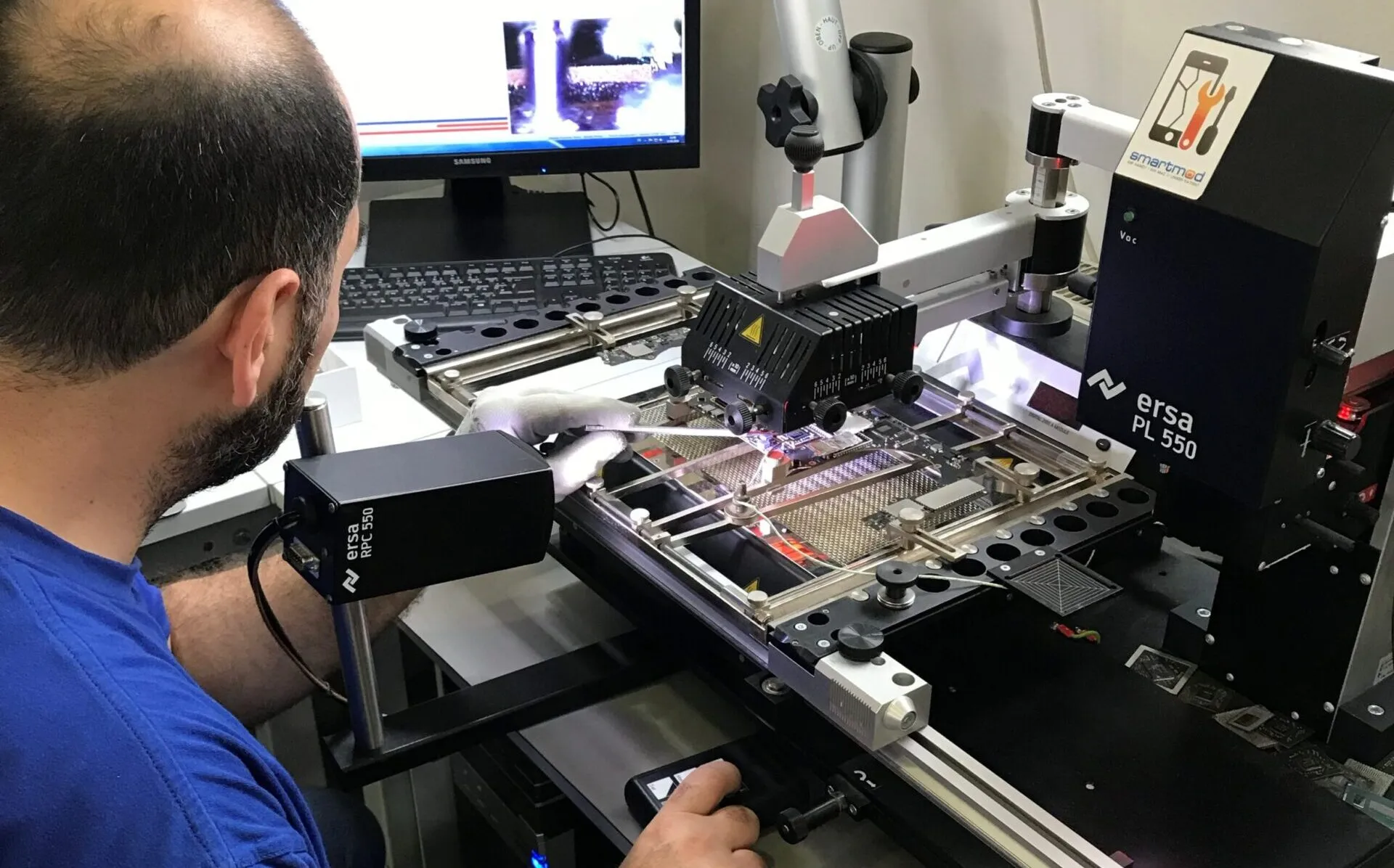
We reconstruct severely damaged smartphones, tablets and notebooks at board level, creating the technical precondition for forensically securing digital evidence and extracting data from damaged mobile devices.
For investigative authorities, digital forensics labs and expert witnesses. In our own lab in Frankfurt am Main.
- Smartphone forensics
- Mobile device forensics
- Board-level reconstruction
- iPhone
- iPad
- Android
- MacBook
Your extraction system is ready. The device is not.
Forensic extraction systems require the relevant hardware to still function sufficiently or to be restorable to a suitable condition.
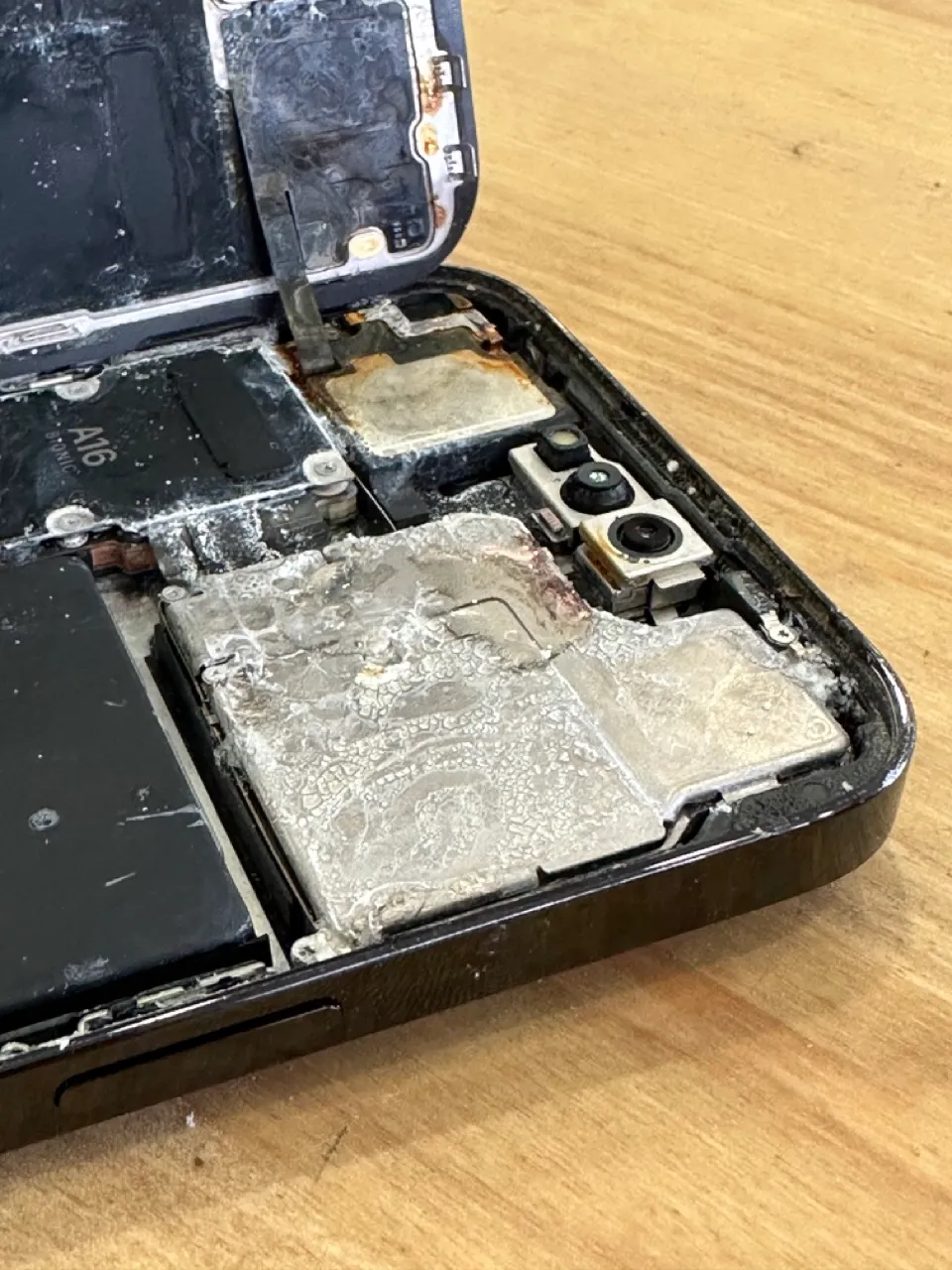
After fire, liquid, mechanical destruction, electrical damage or failed repair attempts, this is frequently no longer the case.
This is where our work begins.
We analyse and reconstruct the original hardware at component level and attempt to restore a condition in which forensic acquisition or extraction becomes possible again.
From damaged evidence to extraction.
- 01
Damaged evidence
The device does not boot, does not communicate or is severely physically damaged.
- 02
Board-level diagnosis
Electrical and microscopic analysis of the original system.
- 03
Hardware reconstruction
Defective assemblies, traces, power supply or interfaces are reconstructed as far as technically possible.
- 04
Extraction-ready condition
The device or the relevant original hardware is made available for further forensic processing.
- 05Either with us or in your lab
Forensic extraction
By smartmod or by the forensics lab you already work with.
We do not replace your forensics lab. We extend its capabilities.
Many forensics labs have excellent tools for extraction and analysis. What is often missing is highly specialised electronics and microsoldering expertise.
smartmod closes exactly this gap. Our focus is on devices that, because of their physical condition, can no longer be reached with conventional extraction methods.
smartmod can be integrated into existing forensic workflows as a hardware escalation stage – from a single exceptional case to permanent collaboration with internal and external forensics labs.
The typical case
Typical cases.
Fire damage
Severe thermal damage to the device and logic board.
Liquid and corrosion damage
Short circuits, corrosion, interrupted traces and damaged assemblies.
Mechanically destroyed devices
Broken boards, damaged connectors and destroyed peripherals.
Device without power
Faulty power supply, short circuits or damaged power rails.
No data communication
USB, Lightning or USB-C communication or other interfaces required for extraction do not work.
Failed prior work
Devices after unsuccessful repair, data recovery or forensic attempts.
Work at component level.
Which methods are appropriate is decided by the diagnosis — depending on platform, damage pattern and device architecture.
- Microscopic board diagnosis
- Microsoldering
- Trace reconstruction
- BGA rework
- Repair of power supplies
- Repair of communication interfaces
- Reconstruction of damaged logic boards
- Preservation of original data- and cryptography-relevant components
- Component transplantation where technically necessary and appropriate
- Temporary reconstruction solely for data and forensic acquisition
- Documentation of hardware interventions performed
Mobile devices are our speciality.
We support expert witnesses and investigative authorities with hardware-side special cases in smartphone and mobile phone forensics. On current mobile devices in particular, data access and hardware are closely linked. Our focus is therefore on preserving the original device electronics and the original components relevant to access.
- Apple iPhone
- Apple iPad
- Android smartphones
- MacBook
Also: Windows notebooks · SSD & flash storage
Reconstruction and extraction are two separate steps.
Hardware Recovery
smartmod
- Diagnosis
- Board-level work
- Reconstruction
- Restoring the required functionality
- Documentation
Forensic Acquisition
Subsequently, depending on the assignment
- by the client’s forensics lab
- or
- where agreed, by smartmod using existing forensic tools
Integrates into existing forensic workflows.
Reconstructed devices can then be processed further with established extraction systems such as Cellebrite UFED or Oxygen Forensics – by smartmod or by the forensic lab the client already works with.
Traceable from handover to return.
Before accepting a device, we will conclude a confidentiality agreement on request — your template or ours. After that:
Documented intake
Assignment, device, serial number or IMEI where available, external condition and time of handover are recorded at intake.
Photo documentation
The condition of the device is documented photographically before any intervention.
Access documentation
From intake onwards, it is traceable who had access to the device and when.
Documentation of interventions
Relevant hardware measures are documented on a case-by-case basis.
Protected data storage
Secured data is kept on our encrypted server and handed over in encrypted form — following the process agreed with you.
No unnecessary transfer
The work takes place in our own lab in Frankfurt. The device is not passed on to third parties.
A specialist lab, not a black box.
Our own lab in Frankfurt
Board-level work, diagnosis and documentation at one location — without outsourcing.
Since 2002
Repair and data recovery in Frankfurt for more than two decades.
Microsoldering in our own lab
We carry out microsoldering, BGA rework, board-level reconstructions and component transplantations in our own lab.
Manufacturer-authorised technicians
Apple Independent Repair Provider since 2021, Samsung-certified since 2023.
Data Recovery Professionals
Member of the trade association since 2022.
References? For good reason, none.
We work for investigative and judicial authorities as well as for assessors and expert witnesses. Investigative work is confidential — which is why we do not name clients.
Clear limits are part of forensics.
Hardware reconstruction is not decryption
A restored hardware function does not guarantee access to encrypted content.
No guarantee of success before diagnosis
With severely destroyed electronics, which functions can be restored can only be assessed after examination.
Damaged mobile evidence: brief answers.
smartmod supports investigative authorities, expert witnesses and digital forensics labs with the board-level reconstruction of physically damaged smartphones and tablets. The aim is to restore the original hardware to the point where a subsequent forensic extraction becomes possible.
Can a severely damaged smartphone still be examined forensically?
Often yes – provided the original components relevant to data and cryptography are intact. With modern smartphones, the aim is usually not to read out the memory chip in isolation, but to reconstruct the original hardware to the point where the device or the relevant original components become accessible again for a forensic extraction. A reliable assessment is only possible after a board-level diagnosis.
What should be done if Cellebrite or Oxygen does not recognise a smartphone because of a hardware defect?
The hardware should be examined first. A board-level diagnosis clarifies whether, for example, power supply, data communication or other functions required for the extraction can be restored. After a successful reconstruction, the device can be returned to the existing forensic workflow.
Can data be extracted from a burnt or mechanically destroyed smartphone?
Under certain circumstances, yes. What matters is the condition of the original components relevant to data and cryptography. Even after considerable fire, liquid or mechanical damage – such as a broken logic board – a reconstruction may be technically possible. A reliable statement is only possible after examining the specific device.
Is chip-off the right method for modern smartphones?
As a rule, no. Current iPhones and Android smartphones encrypt their data and tie access to further components of the original system. A flash memory read out in isolation therefore usually yields only encrypted data. In these cases, preserving or reconstructing the original hardware is often the more promising route.
What is the difference between hardware reconstruction and forensic extraction?
They are two separate work steps. Hardware reconstruction restores the functions of the original hardware required for access, as far as technically possible. The subsequent forensic extraction secures the data that is then accessible, using suitable forensic procedures. A successful reconstruction guarantees neither decryption nor successful data access.
Does smartmod take on cases for external expert witnesses and forensic labs?
Yes. smartmod can be integrated into existing forensic workflows as a hardware escalation level – for individual special cases as well as within an ongoing collaboration. The subsequent extraction is carried out either by the commissioning lab or, by arrangement, by smartmod.
Do you need the complete acquisition or analysis of an intact storage medium?
IT forensics & digital evidence preservation →Can the device still be reconstructed?
For an initial technical assessment, we only need a few details about the device and the damage pattern to begin with.